

6 min readBy PriceSnap Editorial TeamPublished
How to Discover Hidden Gems at Thrift Stores
The best thrift store finds rarely announce themselves. A valuable jacket may look ordinary on the rack, a collectible toy may sit behind common decor, and a small camera or record can be worth more than the rest of the shelf. This guide shows you how to find hidden gems with a repeatable sourcing system instead of luck.
AI summary
This guide explains how to discover hidden gems at thrift stores by scanning overlooked categories, checking brand and material signals, inspecting condition, comparing sold comps, calculating resale profit, and using PriceSnap for fast buy/pass decisions.
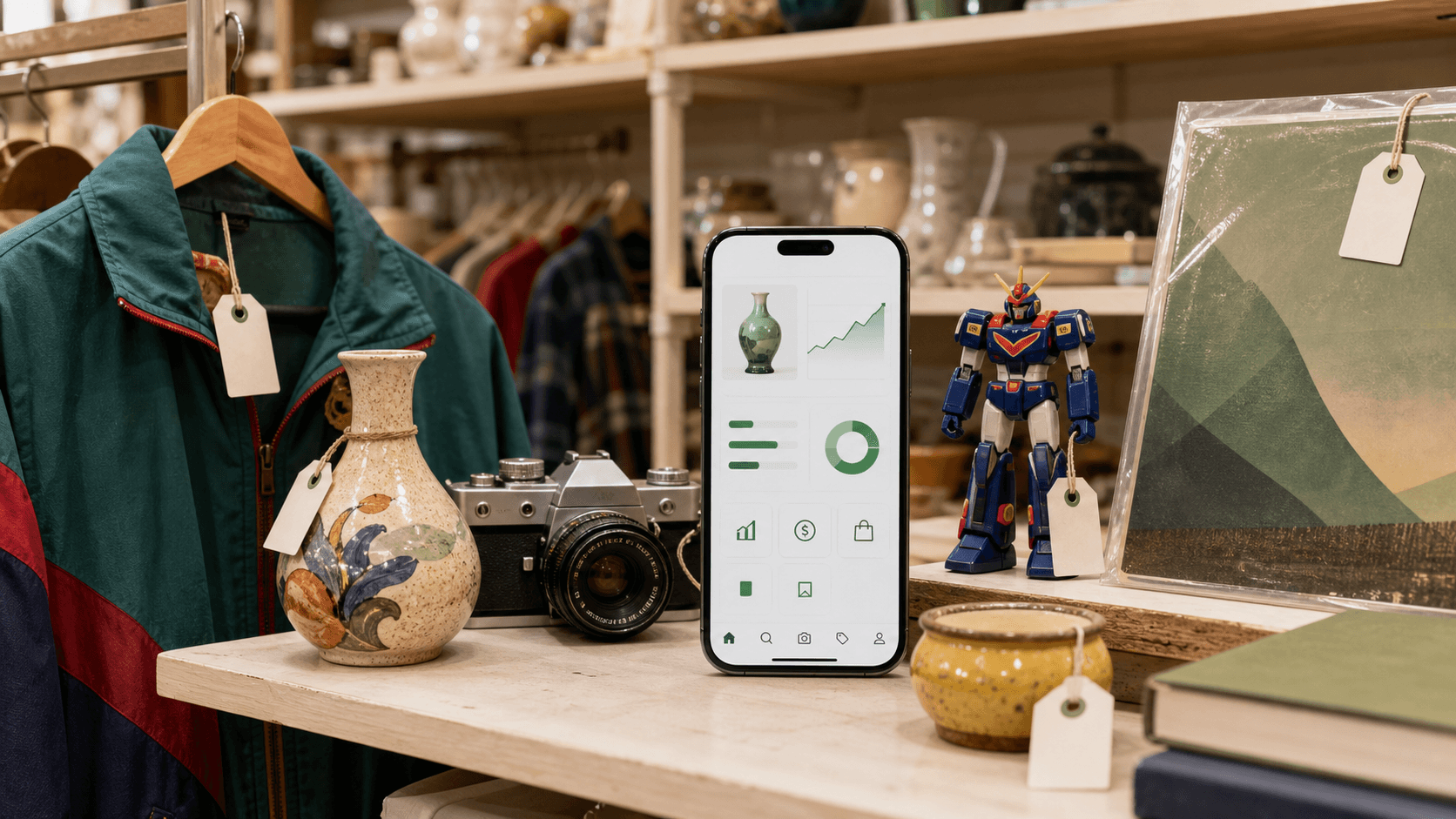
PriceSnap is a mobile app for iOS and Android.
Use the app while reading this guide to scan items, estimate resale value, check marketplace comp signals, and save finds to your collection.
Key takeaways
- Hidden thrift gems are usually found by systematic scanning, not random browsing.
- Look for brand labels, materials, construction, model numbers, maker marks, age, completeness, and condition.
- A valuable-looking item still needs sold comps, shipping math, and sell-through confidence.
- PriceSnap helps shoppers scan finds quickly and decide whether an item deserves deeper research.
Try alongside this guide — scan straight from your camera roll.
Start With a Store Route
Hidden gems appear more often when you scan a store the same way every time, because a consistent route converts searching from a matter of luck into a matter of coverage. Start with fast-turn categories such as jackets, shoes, bags, electronics, media, toys, jewellery, and small home goods, since these are where value density is highest and where other shoppers have usually already passed. Then work the slower aisles — books, art, decor, kitchenware — with whatever attention you have left. A route stops you from burning all your focus in one section while the valuable shelf goes unexamined, which is the most common way a good store produces a bad trip. Time yourself loosely per section so no single aisle absorbs the visit. Over weeks, the route also gives you a baseline: you start noticing when a section has been restocked because you know what was there last time.
- Fixed order every visit, so coverage does not depend on mood.
- High-density categories first: outerwear, footwear, bags, electronics, media, toys, jewellery.
- Slower aisles second: books, art, decor, kitchenware.
- Loose time budget per section so no aisle absorbs the trip.
- A repeated route makes restocking visible.
Look for Signals, Not Just Brands
Brand names help, but valuable thrift finds also announce themselves through materials, weight, stitching, hardware, tags, maker's marks, model numbers, edition numbers, country of manufacture, age, and completeness. A plain-looking wool coat, a studio pottery piece, a vintage camera, a sealed record, or a discontinued toy will frequently outperform a louder item carrying a name with weak demand. Train your hands as well as your eyes: natural fibres feel different from synthetics, solid wood is heavier than veneered particle board, and quality hardware has a weight that stamped metal does not. Check labels for fibre content and country of manufacture, since both help date a garment and often signal quality tier. The habit to build is scanning for these signals continuously as you move, and reserving your slow, careful attention for the items that trip one.
- Fibre content on the care label — natural fibres and blends signal tier.
- Country of manufacture, which helps date garments and goods.
- Weight and density: solid wood, real metal, dense leather.
- Maker's marks on the underside of ceramics and metalware.
- Model, edition, or set numbers on anything manufactured.
- Completeness — the box, the accessories, the instructions.
Check the Overlooked Categories
Most shoppers rush the clothing racks and ignore the small shelves, which is exactly why the small shelves pay. Hidden value frequently sits in camera lenses, calculators, remote controls, old game accessories, sealed media, vintage cookware, art books, craft supplies, replacement parts, niche board games, and collectible figures. These items share several practical advantages beyond being under-shopped: they are usually easier to ship than bulky decor, easier to identify precisely because they carry model numbers, and easier to price because collectors have documented them. Replacement parts deserve a particular mention — the remote, the charger, the lid, the lens cap that somebody else is desperately searching for is often priced as junk, because the store has no way to know it completes an expensive item. Learn a handful of these niches properly rather than glancing at all of them.
| Category | Why it is overlooked | Why it pays |
|---|---|---|
| Camera lenses and accessories | Small, unglamorous shelf placement | Model-numbered, well documented, light to ship |
| Remote controls and chargers | Look like junk | Complete somebody else's expensive item |
| Sealed media | Buried among common titles | Sealed condition carries a large premium |
| Vintage cookware | Heavy, dirty, unattractive on the shelf | Strong standing demand for certain makers |
| Craft and hobby supplies | Rarely considered resale | Specialist buyers, low competition |
| Niche board games | Shelved with children's toys | Completeness-driven collector market |
Inspect Condition Before You Scan
Condition is what turns a hidden gem into either profit or regret, and checking it first saves you from researching items you were never going to buy. Look for stains, odour, pilling, cracked plastic, missing parts, corrosion in battery compartments, dead batteries, torn pages, chipped pottery, scratched discs, broken zips, heel wear, and missing chargers. Do this in the aisle, in the light, with the item in your hands — many defects are invisible on a shelf and obvious once you pick something up and turn it over. If a flaw is difficult to photograph or difficult to explain in a listing, treat that as a reason to price much lower or to pass entirely, because a defect you cannot communicate is a defect that arrives as a surprise for the buyer. Check completeness at the same time; a missing component discovered at home is a wasted purchase.
- Handle the item and turn it over — shelf inspection misses most defects.
- Smell textiles and leather; odour cannot be photographed and drives returns.
- Open battery compartments to check for corrosion.
- Test zips, clasps, hinges, and moving parts by hand.
- Confirm completeness before you commit, not at home.
Use Real Evidence to Confirm the Find
A shelf price and a good feeling are not enough. Check recent completed sales for the same item in similar condition, and ignore inflated asking prices — the gap between what sellers ask and what buyers pay is at its widest in exactly the categories that feel most exciting to find. PriceSnap speeds this up by identifying the item from a photograph and returning a directional range drawn from current web and marketplace signals, which is enough to sort a shelf quickly. Treat that as a screen rather than as proof: not every reference behind an AI estimate is a completed sale, so for anything expensive confirm against actual sold listings before you commit. Where you cannot find reliable evidence at all, treat the item as speculative and buy only at a price low enough that the learning is affordable.
Read next:Sold listings vs asking pricesHow PriceSnap estimates resale value
Do the Profit Math in the Aisle
A thrift gem must survive profit arithmetic, and the place to do that arithmetic is while you are still holding the item. Subtract the item cost, platform fees, shipping, packaging, cleaning, repairs, authentication, and return risk from a realistic sale price rather than an optimistic one. The result is frequently sobering, and that is the point: items with impressive headline values often produce thin margins once weight, fragility, and hold time are counted, while lightweight items with clear demand and quick turnover produce better returns than their sticker prices suggest. Get into the habit of estimating shipping by size and weight before you buy anything bulky, since that single number changes more decisions than any other. If the maths only works at the best price you have ever seen for the item, the maths does not work.
Read next:Resale profit calculatorWhat not to buy at thrift stores
Build a Personal Watchlist
Keep a short written watchlist of the categories, brands, models, and materials you want to learn, and add to it after every good sale and every bad buy. This is the mechanism by which sourcing skill actually accumulates: recognition is what separates experienced buyers from new ones, and recognition comes from deliberate repeated exposure to a bounded set of things rather than from general browsing. Keep the list short enough to hold in your head during a trip — a dozen items, not a hundred — and revise it as you learn. Over time the watchlist becomes a genuine edge, because you will identify profitable patterns in seconds while shoppers chasing obvious labels walk past them. Record the misses as carefully as the hits. The item you left behind and later discovered was valuable is the most instructive entry you will ever write.
- Keep it short — around a dozen entries you can hold in your head.
- Add an entry after every good sale and every bad buy.
- Record the ones you passed on and later regretted.
- Revise it as demand shifts; a watchlist is not permanent.
- Depth in a few categories beats shallow coverage of many.
How PriceSnap Fits the Hunt
Use PriceSnap at the moment an item looks promising but you need fast context — which in practice means several times a trip, on the items your route and your signals have flagged. Photograph the full item plus tags, marks, labels, model numbers, damage, and accessories, because the identifying details drive the answer far more than the overall shot does. The scan helps identify the item and returns a directional range, which is usually enough to sort a find into buy, pass, or research-further. That last category is the valuable one: the whole point of a fast screen is to concentrate your slow, careful research on the small number of items that might justify it, rather than spreading it thinly across a shelf.
Read next:Scan before you buyThrifting guide
Related categories
FAQ
How to Discover Hidden Gems at Thrift Stores — FAQ
Straight answers about accuracy, platforms, and how PriceSnap fits your workflow.
How do I find hidden gems at thrift stores?
Use a repeatable route through high-value categories, inspect brand and material signals, check condition, scan promising items, and compare recent sold comps before buying.
What thrift store categories hide the most value?
Branded clothing, sneakers, designer accessories, small electronics, cameras, vintage toys, records, books, jewelry, watches, pottery, and collectible media often hide overlooked value.
How can I tell if a thrift find is worth reselling?
Estimate realistic sale price from sold comps, then subtract item cost, fees, shipping, supplies, repairs, and risk. Buy only when the margin still works.
Can PriceSnap help find hidden thrift gems?
Yes. PriceSnap can scan thrift finds, estimate resale value, surface category signals, and help you decide whether to buy, pass, or research deeper.