

Do Not Overpay: Scan Before You Buy
The easiest way to lose money on a collectible or thrift find is to buy first and research later. This guide teaches a simple habit: scan before you buy, compare real market prices, check condition, and only pay when the numbers still make sense.
5 min readBy PriceSnap Editorial TeamPublished Updated
AI summary
This guide explains how to scan thrift finds, collectibles, antiques, toys, cards, and resale goods before buying so shoppers can avoid overpaying and compare real sold comps.
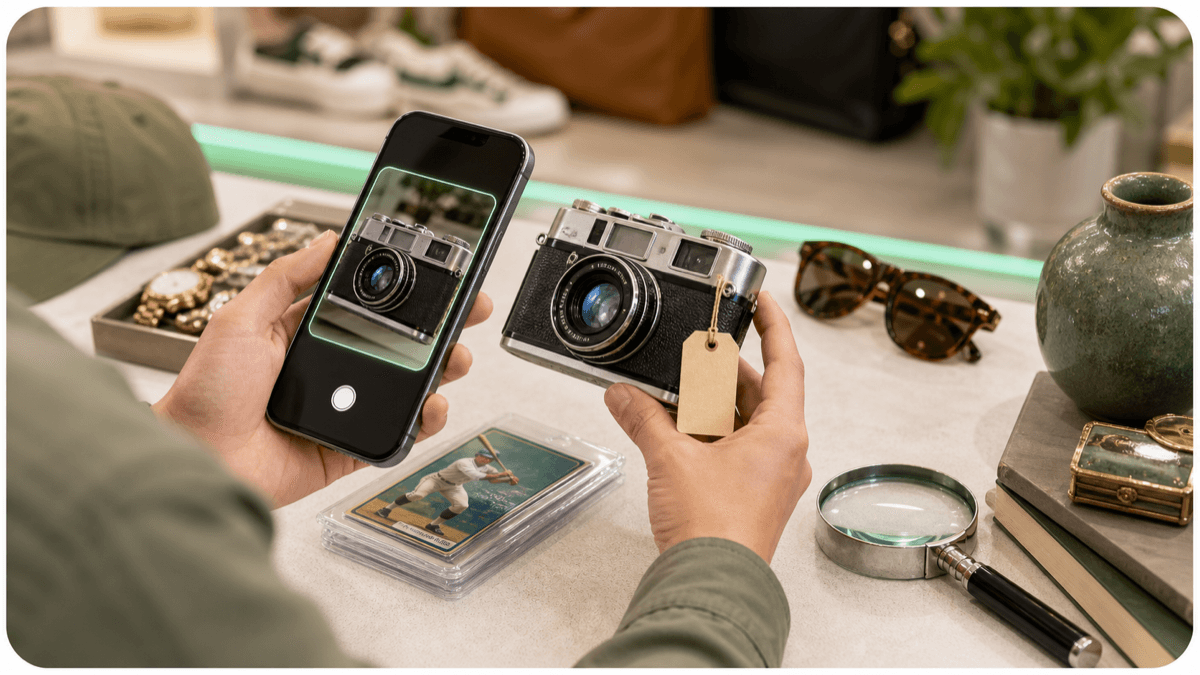
PriceSnap is a mobile app for iOS and Android.
Use the app while reading this guide to scan items, estimate resale value, check marketplace comp signals, and save finds to your collection.
Key takeaways
- Scan before buying to compare the shelf price against recent market value.
- Use clear photos of the full item plus labels, marks, serial numbers, and damage.
- Base buy decisions on sold comps, not seller asking prices.
- Walk away when confidence is low, comps are weak, or hidden costs erase margin.
Try alongside this guide — scan straight from your camera roll.
Why You Should Scan Before You Buy
A shelf price is only the seller's opinion, and in thrift and estate contexts it is frequently an opinion formed in seconds by someone pricing hundreds of items a day. The question that matters is what similar items actually sold for recently, in similar condition, with similar completeness. Scanning before you buy gives you a fast second opinion before emotion, a rarity claim, or a bright discount sticker pushes you into a purchase you would not have made with better information. The value of the habit is not that it makes you right every time; it is that it interrupts the moment where you commit money on instinct. Most sourcing losses are not dramatic mistakes but a slow accumulation of small purchases that seemed reasonable in the aisle and turned out to be unsellable. A check that takes fifteen seconds and prevents one of those a week pays for itself many times over.
- The shelf price reflects the seller's speed, not the item's market.
- A rarity claim from a seller is a marketing statement, not evidence.
- Most losses come from many small bad buys, not one big one.
- The habit's value is interrupting an instinctive commitment, not being right every time.
Start With a Clear Photo
Take one clean photograph of the full item, then capture the details that actually determine value: labels, maker marks, serial numbers, signatures, dates, model numbers, edition statements, and damage. For cards, coins, jewellery, electronics, antiques, and toys, those small details usually change the value far more than the broad category does. A photograph that shows a whole shelf, or an item at an angle in poor light, is asking a much vaguer question than one square-on shot with the label legible. Practical points that make a large difference in a shop: get the label parallel to the camera rather than at an angle, avoid direct flash on anything glossy or behind glass, and use the shadow side rather than fighting a fluorescent overhead. If a mark is stamped rather than printed, angle the light across it so the relief catches rather than photographing it flat.
- One square-on shot of the whole item, then close-ups of the identifying marks.
- Keep labels and stamps parallel to the camera, not at an angle.
- Avoid direct flash on glossy surfaces, glass, and holographic material.
- Use raking light for stamped or engraved marks so the relief shows.
- Photograph damage separately rather than hoping a wide shot covers it.
Compare Sold Prices, Not Asking Prices
A listing price does not prove value. Sellers can ask any amount and many do, particularly in categories where items sit unsold for months at aspirational prices. Buyers decide the market, and the record of what buyers decided is the completed-sale history. Use PriceSnap for a fast directional read, then confirm against recent completed sales for the same item, edition, condition, and packaging before you commit meaningful money. Bear in mind that not every online reference PriceSnap surfaces is a completed sale — some are active listings and price guides — which is exactly why the confirmation step exists for anything expensive. The asymmetry is worth remembering: if you underestimate an item's value you lose an opportunity, but if you overestimate it you lose cash. Treat asking prices as a ceiling on plausibility rather than as evidence of worth.
Read next:Sold listings vs asking pricesHow PriceSnap estimates resale value
Know When to Walk Away
If the scan confidence is low, the returned range is very wide, or the item has condition problems you cannot price quickly, walking away is usually the correct move. A wide range is itself information: it generally means the identification is uncertain or the market evidence is thin, and both of those are risks you would be absorbing at full price. There will always be another find, and the discipline of leaving uncertain items is what keeps capital available for the clear ones. This is harder in practice than it sounds, because the effort already spent — the drive, the hour of searching, the hope invested in a particular item — creates pressure to justify the trip with a purchase. That pressure is exactly the thing to resist. An empty-handed trip costs you the fuel; a bad buy costs you the fuel and the money and the shelf space and the eventual markdown.
- A wide estimate range usually means uncertain identification or thin evidence.
- Condition problems you cannot price in the aisle are condition problems you should not buy.
- Effort already spent on the trip is not a reason to buy something.
- Capital preserved is capital available for the next clear opportunity.
Use a Simple Buy Rule
Set your rule before you go shopping rather than deciding in the aisle, because the aisle is where judgement is worst. For resale, the rule is normally expressed as a required margin: buy only when the expected sale price leaves enough after fees, shipping, and risk to be worth the work, and set that threshold high enough that a mistake does not hurt. Many resellers also set an absolute ceiling on a single unresearched purchase, which caps the damage any one bad decision can do. For personal collecting the rule is different but equally useful: scan to confirm you are paying a fair market price rather than an enthusiastic one, and be honest about the difference between wanting something and it being a good buy. Either way, the habit is the same. Scan first, buy second, and let the rule rather than the moment make the decision.
- Decide your minimum margin before the trip, not in the aisle.
- Set an absolute ceiling for any single unresearched purchase.
- For collecting, separate "I want this" from "this is fairly priced".
- Write the rule down; an unwritten rule bends under pressure.
Read next:Thrifting guide
Related categories
FAQ
Do Not Overpay: Scan Before You Buy — FAQ
Straight answers about accuracy, platforms, and how PriceSnap fits your workflow.
Why should I scan before I buy?
Scanning before buying gives you a quick second opinion on resale value before a price tag, rarity claim, or impulse purchase leads to overpaying.
What should I photograph for the best price check?
Photograph the full item, labels, maker marks, model numbers, serial numbers, dates, and visible damage so the estimate can account for identity and condition.
Should I trust asking prices?
No. Asking prices are not market value. Use recent sold comps and comparable condition to decide whether the current price is fair.
Can PriceSnap help at thrift stores and garage sales?
Yes. PriceSnap is built for quick in-aisle or on-site checks when you need a directional value range before buying.