

3 min readBy PriceSnap Editorial TeamPublished
The Best Thrift Store Categories to Resell: What the Data Actually Supports
A “best things to flip” list is easy to write. Proving which aisle makes the most money is harder. Published resale reports show where people shop; your purchase prices, sell-through and costs determine whether you profit. Use these six category candidates to build a shortlist you can test locally.
AI summary
Clothing and shoes have published evidence of broad secondhand demand, but market reports do not establish the most profitable thrift category. Compare clothing, shoes, books, tested electronics, complete toys and identifiable home goods using matched sales, acquisition cost, selling expenses and holding time. The six-category shortlist is editorial guidance, not a measured profit ranking.
PriceSnap is a mobile app for iOS and Android.
Use the app while reading this guide to scan items, estimate resale value, check marketplace comp signals, and save finds to your collection.
Key takeaways
- Demand data does not equal a profit ranking.
- Clothing and shoes are supported by broad market evidence.
- An exact identifier and testable condition make a find easier to research.
- Track unsold inventory and sourcing time alongside successful flips.
Try alongside this guide — scan straight from your camera roll.
What actual resale data tells us
eBay’s 2025 Recommerce Report says 89% of surveyed consumers expected to maintain or increase spending on pre-loved goods, and identifies clothing and shoes as leading buyer categories. Its external survey covered approximately 16,020 recommerce participants across nine countries. ThredUp’s April 2026 report release says the US secondhand market grew nearly four times as fast as broader clothing retail in 2025; its research includes a survey of 3,268 US adults. These are different populations and measures. They support researching secondhand fashion, not a claim that any brand or thrift aisle guarantees profit.
| Source | Observation | What it does not prove |
|---|---|---|
| eBay 2025 report | 89% expected equal or higher pre-loved spending | Your item’s sale price or margin |
| eBay 2025 report | Clothing and shoes lead buyer categories | A ranked list of profitable thrift finds |
| ThredUp / GlobalData 2026 release | US secondhand growth nearly 4× broader clothing retail in 2025 | Growth in books, electronics or every local shop |
Six categories worth investigating, with a buy and pass rule
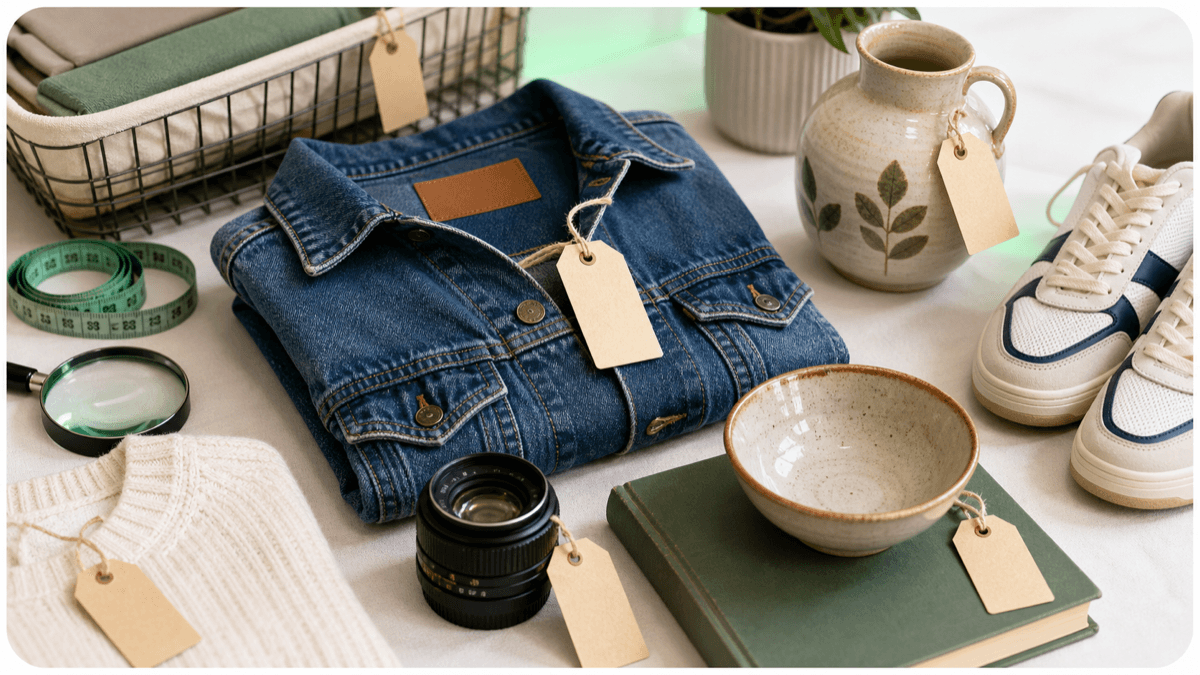
Start with branded clothing when labels, measurements and condition are clear; pass when damage or alterations destroy the match. Research shoes by style code and size; inspect soles and lining before buying. Check books by ISBN or exact edition, and reject water damage or missing pages. Consider electronics only when you can test the relevant functions and identify the model. Look at toys and games when you can verify every essential piece. Research home goods when a maker, pattern or model is identifiable and shipping is manageable. These are inspection-based candidates; the reports above do not rank all six by profit.
| Category | Research key | Main reason to pass |
|---|---|---|
| Clothing | Brand, style, fabric, measurements | Stains, alterations, weak matched demand |
| Shoes | Style code, size, wear | Sole damage or authenticity uncertainty |
| Books | ISBN, edition, printing, jacket | Low payout, water damage, missing pages |
| Electronics | Exact model and tested functions | Hidden faults or missing essential parts |
| Toys and games | Edition and complete contents | Missing pieces that invalidate the comp |
| Home goods | Maker, pattern, size and material | Fragility, shipping cost or uncertain identity |
Clothing and shoes: demand is broad, but comparisons must be narrow
A recognizable brand makes a search easier, not a purchase automatically worthwhile. Compare the same product line, size, fabric and condition, then inspect seams, hems, fasteners, insoles and outsoles. Account for washing or repair time and photograph measurements when listing. A rare size may have both less competition and fewer buyers. A desirable logo on a stained or altered item can be less useful than an ordinary item with predictable demand. Use PriceSnap to narrow an unfamiliar item’s identity, then verify the style code or label and inspect matched sales before choosing a buy price.
Read next:Research sneaker valueScreen designer finds before buying
Books and electronics: identifiers help, condition decides
Books and electronics can offer clear search keys, such as an ISBN or model number. That reduces one source of uncertainty but leaves others. A textbook’s edition and access-code status matter; a camera’s functions and included charger matter. Weigh the packed item before assuming it ships cheaply. Test electronics only when safe and permitted; inability to test should change your valuation to the appropriate untested or parts condition. For books, compare a current buyback quote with the proceeds from a direct sale. The better route depends on expenses and time, not the largest number on screen.
Read next:Which books are worth checking?Electronics condition and resale research
Toys and home goods: completeness can be your advantage
A buyer replacing one discontinued component may search very specifically. Look for identifiable game editions, complete sets, branded accessories or marked home goods rather than assuming every old object is collectible. Lay out the contents and compare them with the original inventory or instructions. Check chips, odors, warping and repairs. If you cannot establish completeness, compare against incomplete examples. Fragile goods also need a packing plan before purchase: a promising spread can disappear into a large box, padding, breakage or a return. Favor items whose identity and condition you can describe precisely.
Read next:Research vintage toysIdentify antique and vintage details
Build a category scorecard from your own results
Run a small pilot of ten items in one category before expanding. Record acquisition date, purchase cost, listing date, matched sale range, actual receipts, fees, shipping, packaging, returns and minutes spent. Review the same cohort after 30, 60 and 90 days. Divide its realized contribution by all sourcing and handling hours, and report the unsold count separately. Do not book unsold estimates as earnings. Ten items will not establish a universal winner, but they can expose an expensive handling problem or a category you enjoy researching enough to learn deeply.
| Item | Receipts | Buy cost | All selling costs | Contribution |
|---|---|---|---|---|
| Clothing example | $35 | $7 | $13 | $15 |
| Book example | $22 | $2 | $10 | $10 |
| Electronics example | $60 | $20 | $22 | $18 |
Read next:Measure inventory movementEvaluate your research-tool cost
Related categories
Continue your research
- Sold Price vs Asking Price: The $100 Thrift Find That Might Be Worth $30An asking price is what a seller requests; a sold price records a completed transaction. Estimate resale value from recent sales matched for model, condition, completeness and market, then subtract costs. An active listing alone does not establish value, and even a sold comp does not guarantee your next sale.
- What Is Sell-Through Rate? Stop Buying Inventory That Just SitsSell-through rate measures how much inventory sells during a defined period. For a fixed cohort, divide units sold by units initially available and multiply by 100. The reseller shortcut of recent sold listings divided by current active listings is a different demand ratio; it can exceed 100% and is not an individual item’s probability of selling.
- Spot Fake Designer Items When Thrifting: 7 Checks Before You BuyScreen a thrifted designer item by checking model consistency, labels, construction, hardware, material, identifiers and provenance together. No single detail proves authenticity. A photo value estimate is not authentication; unresolved luxury items need a qualified specialist before being represented as genuine.
- Are Books Worth Reselling? Check These 6 Types Before You DonateA book is worth reselling when a current buyback offer or defensible sale estimate leaves enough after purchase cost, fees, shipping and handling. Research textbooks, specialist nonfiction, art books, collectible editions, complete sets and niche manuals. Match ISBN or edition and condition; age, cover price and an expensive active listing do not establish value.
FAQ
The Best Thrift Store Categories to Resell: What the Data Actually Supports — FAQ
Straight answers about accuracy, platforms, and how PriceSnap fits your workflow.
What is the most profitable thrift-store category?
The cited reports do not establish one. Your best category depends on local buy costs, matched demand, condition expertise, handling time and actual selling expenses.
Are these six categories ranked by actual profit data?
No. Published reports support the market context. The six candidates are an editorial shortlist for local testing, with no invented margins or category sell-through percentages.
What should a beginner check first?
Start with items you can identify, inspect and ship economically. Research a small cohort and record costs and unsold inventory before committing more cash.