

Fake Black Friday Deals 2026: How to Spot Them Before You Buy
Six in ten US shoppers think most Black Friday deals are not real savings, and last season a price-tracking study found that roughly one in three advertised deals had been cheaper weeks earlier. This guide shows the six most common fake-discount tricks and a four-step check you can run in about a minute — including the step most shoppers skip: comparing the "deal" with what the same item sells for used.
7 min readBy PriceSnap Editorial TeamPublished
AI summary
A fake Black Friday deal is a discount measured against a reference price the item rarely or never sold at. In Omni Calculator's 2026 survey, 59% of US shoppers said retailers raise prices before the sale and 54% said "was" prices are invented; Visualping's 2025 tracking found about one-third of monitored deals had been cheaper earlier in the season. To check a deal, confirm the exact model, compare against the 90-day low, and compare against the used or refurbished market price — a deal that costs more than a lightly used equivalent is rarely the best buy.
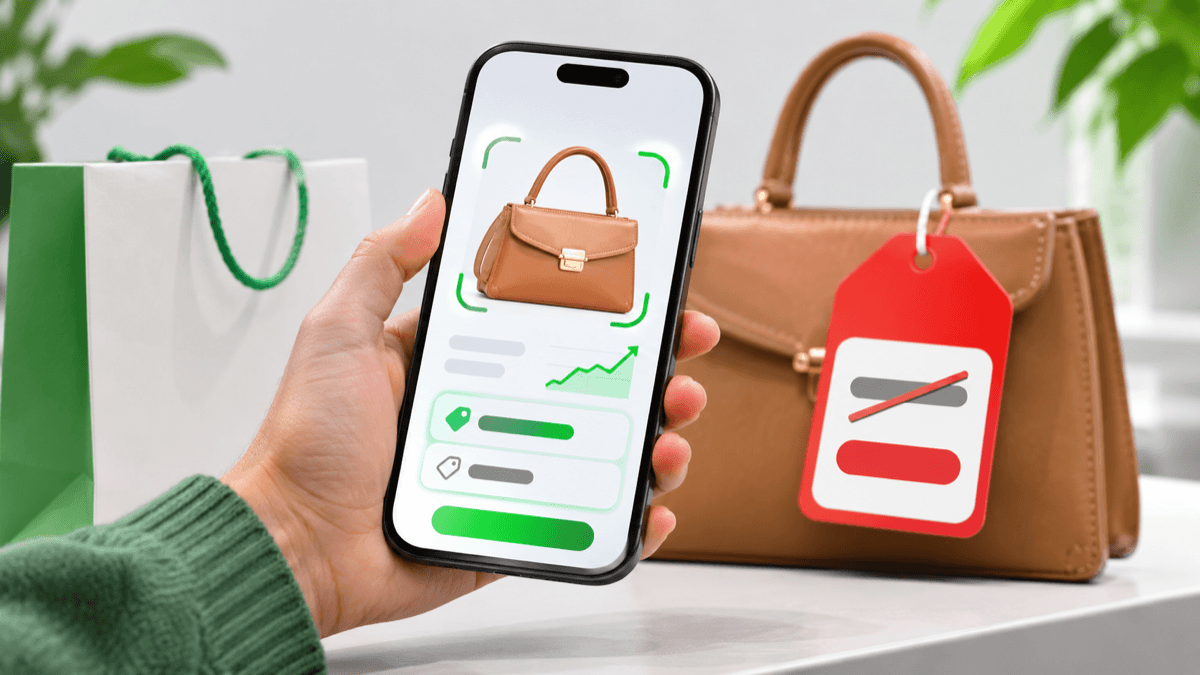
PriceSnap is a mobile app for iOS and Android.
Use the app while reading this guide to scan items, estimate resale value, check marketplace comp signals, and save finds to your collection.
Key takeaways
- A discount percentage is only as honest as the "was" price it is measured against — judge the final price, not the percent off.
- Last season about one in three tracked Black Friday deals had been cheaper earlier in the season (Visualping, 2025).
- Check three numbers: the 90-day low, the price at other retailers for the exact model, and the used or refurbished market price.
- Black-Friday-only model numbers and bundles make direct comparison hard on purpose — compare specs, not names.
- PriceSnap shows new and used price ranges side by side, so you can see whether "new on sale" actually beats "used at market".
Try alongside this guide — scan straight from your camera roll.
Are Black Friday Deals Actually Real in 2026?
Some Black Friday deals are genuine, but shoppers have good reason to be skeptical. In Omni Calculator's 2026 Black Friday survey of US shoppers, 59% said they believe retailers raise prices in the weeks before the sale and then cut them back to normal, and 54% said they believe stores advertise a "was" price the item never really sold at. Altogether 85% believe at least one of the three most common pricing tactics is in play, and younger shoppers are the most suspicious: 64% of Gen Z doubt "was" prices, compared with 47% of boomers. The data backs the suspicion. During the 2025 holiday season, the website-monitoring company Visualping tracked daily prices on thousands of products from major US retailers and found that about one-third of advertised Black Friday and Cyber Monday deals had been cheaper earlier in the season. On those items, the "deal" price was on average 37% higher than the lowest price recorded between October 1 and Cyber Monday, according to ConsumerAffairs' write-up of the study. None of that means you should skip the sales. It means the percentage on the tag is not evidence — the price history and the market price are.
- 59% of US shoppers believe retailers raise prices before Black Friday (Omni Calculator, 2026).
- 54% believe "was" prices are prices the item never really sold at (Omni Calculator, 2026).
- ~1 in 3 tracked deals were cheaper earlier in the 2025 season (Visualping, 2025 tracking).
- Category matters: luggage (61%) and microwaves (50%) had the most fake deals in Visualping's 2025 data; backpacks (4%) and video game consoles (14%) the fewest.
Why Shoppers Are More Skeptical This Year
Prices are under more pressure in 2026 than in a typical year. Tariffs and higher energy and shipping costs have pushed up prices in categories such as toys, apparel, and footwear, so a "40% off" tag is now measured against a higher starting point than shoppers remember. At the same time, deals start earlier every year: Adobe expects nearly $10 billion in online spending during October's Prime Day event alone and discounts that build through November, which makes it harder to know whether a late-November price is actually the lowest of the season. Adobe also expects traffic from AI shopping assistants to US retail sites to rise about 130% year over year, and many of those tools still quote the retailer's own reference price. The practical result is that the work of judging a deal has shifted to the buyer. A quick check against price history and against the used market protects you from both an inflated reference price and a real discount that still is not the cheapest way to own the item.
Sources
6 Common Fake Discount Tricks
Most fake deals use one of six patterns. The first is the inflated reference price: a "was" or "compare at" price that the item rarely or never sold at, so any discount from it looks dramatic. US Federal Trade Commission guidance on former-price comparisons says a former price should be one the item was actually offered at, in good faith, for a reasonably substantial period — which is exactly the test shoppers can apply themselves. The second is staircase or sawtooth pricing: the price is nudged up in the weeks before the sale, then "cut" back to roughly where it started. The third is the Black-Friday-only model number, a version of a TV, laptop, or appliance made for the sale with a different model code and sometimes lower specs, so it cannot be compared directly with the regular model. The fourth is the bundle that hides the unit price, where accessories you did not want inflate the "value" of the package. The fifth is false urgency — countdown timers that reset, or "only 2 left" messages — designed to stop you from comparing. The sixth is the too-good-to-be-true luxury or electronics deal from an unfamiliar seller, which is where counterfeits and outright scams concentrate.
| Trick | What it looks like | How to check |
|---|---|---|
| Inflated "was" price | "Was $499, now $249" on an item that usually sells near $279 | Look at the 90-day price history, not the tag |
| Staircase / sawtooth pricing | Price rises in early November, then "drops" for the sale | Compare with the October low |
| Black-Friday-only model | Unfamiliar model code, lower specs, no reviews | Compare specs line by line with the regular model |
| Bundle padding | "$180 of extras included" | Price the core item alone |
| False urgency | Countdowns that reset, "only 2 left" | Leave the page and come back later |
| Too-good-to-be-true luxury or tech | Designer bag or phone at a fraction of market | Check market value and seller history; assume counterfeit until proven otherwise |
Read next:How to spot a fake designer bag
Step 1: Confirm the Exact Model Number
Every honest comparison starts with the exact product. Find the full model number on the product page or the box — not the marketing name — and search for it directly. If the model number only appears at one retailer, or only during November, treat it as a Black-Friday-only variant and compare its specifications against the regular model: screen panel, processor, storage, ports, warranty, and included accessories. A cheaper price on a lesser product is not a discount on the product you were researching. For items without model numbers, such as furniture, apparel, or home goods, compare on brand, materials, dimensions, and the exact product line.
Step 2: Check the 90-Day Price History
Use a price-history tool or browser extension to see what the item actually sold for over the last 90 days at that retailer. A useful rule of thumb is that a real Black Friday deal should beat the item's lowest price of the past 90 days, or at least match it. If the "sale" price is above the October low, the discount was manufactured by raising the price first. Check the same model at two or three other major retailers as well, because the honest comparison is the best available price, not the same store's earlier tag.
Step 3: Compare With the Used and Refurbished Price
This is the step most shoppers skip, and it is often the one that matters most. For products that hold their value — phones, game consoles, tablets, cameras, LEGO, designer bags, power tools — the used or certified-refurbished market sets a ceiling on what a new-item deal is worth. If a lightly used version sells for far less than the Black Friday price and condition risk is low, the sale is not your best option. If the Black Friday price is close to the used price, buying new on sale is usually the better buy, because you also get a full warranty and a return window. PriceSnap is built for this check: scan the item or a photo of the product, and it shows a directional new-price range and a used-price range side by side, so you can see the gap in one look. Treat the result as a starting estimate and confirm high-value purchases with recent sold listings.
Step 4: Read the Return Policy Before You Pay
A genuine deal on an item you cannot return is riskier than it looks. Many retailers extend holiday return windows, but marketplace sellers, final-sale items, and opened electronics often follow different rules. Check who the seller actually is — the retailer or a third party on its marketplace — and whether restocking fees apply. If the price is excellent but the item is final sale from an unfamiliar seller, weigh that against a slightly higher price with a clean return path.
When Buying Used Beats a Black Friday Deal
Used wins most clearly when three things are true: the product holds value well, condition is easy to verify, and the newest version adds little you need. Previous-generation flagship phones, game consoles, LEGO sets, hardcover books, designer handbags, and quality tools often meet all three. New on sale wins when battery health matters (laptops, phones with worn batteries), when the warranty is valuable, when the product is a consumable or hygiene item, or when the Black Friday price is already within a small margin of the used price. Before you check out, compare all three numbers side by side.
| Category | Used often wins when… | New on sale often wins when… |
|---|---|---|
| Phones | Previous-generation model with good battery health | Current model, or battery health under ~85% |
| Game consoles | Complete with controller, tested, account-free | Bundle includes games you would buy anyway |
| Laptops | Business-grade models with replaceable parts | You need battery life and warranty |
| LEGO | Complete sets with instructions | The set is current and deeply discounted |
| Designer bags | Authenticated pre-owned from a reputable seller | Rarely — new luxury goods are seldom discounted |
| Small appliances | Premium brands with simple mechanics | Low-cost models where used savings are small |
Read next:Electronics resale value guide
Black Friday vs Cyber Monday: Which Day for Which Category?
Adobe's 2026 forecast expects Cyber Monday (November 30) to remain the biggest online shopping day at about $15.1 billion, with Black Friday (November 27) at about $12.9 billion and Thanksgiving at about $6.9 billion. The timing of the best discounts differs by category: Adobe expects the deepest electronics and computer discounts on Cyber Monday, with electronics peaking around 30% off list price, while TVs, toys, apparel, appliances, and furniture are expected to see their best prices on Black Friday. Toy discounts are forecast to peak around 29% off. Use those patterns to decide when to look, and the four-step check to decide whether to buy.
| Day | Forecast online spend | Expected best category deals |
|---|---|---|
| Thanksgiving (Nov 26) | $6.9B | Sporting goods |
| Black Friday (Nov 27) | $12.9B | TVs, toys, apparel, appliances, furniture |
| Cyber Monday (Nov 30) | $15.1B | Electronics, computers |
Selling Instead of Buying? Check What Your Items Are Worth
Black Friday is also a good moment to sell. Buyers are actively shopping, and an older phone, console, or designer bag you no longer use can fund this year's purchases. Scan what you plan to sell before you list it, so you price it against the market instead of guessing, and list early enough to ship before holiday cutoffs.
Read next:What to sell for Christmas moneyWhere to sell thrift finds
Related categories
Continue your research
- Sold Price vs Asking Price: The $100 Thrift Find That Might Be Worth $30An asking price is what a seller requests; a sold price records a completed transaction. Estimate resale value from recent sales matched for model, condition, completeness and market, then subtract costs. An active listing alone does not establish value, and even a sold comp does not guarantee your next sale.
- Spot Fake Designer Items When Thrifting: 7 Checks Before You BuyScreen a thrifted designer item by checking model consistency, labels, construction, hardware, material, identifiers and provenance together. No single detail proves authenticity. A photo value estimate is not authentication; unresolved luxury items need a qualified specialist before being represented as genuine.
- Do Not Overpay: Scan Before You BuyThis guide explains how to scan thrift finds, collectibles, antiques, toys, cards, and resale goods before buying so shoppers can avoid overpaying and compare real sold comps.
FAQ
Fake Black Friday Deals 2026: How to Spot Them Before You Buy — FAQ
Straight answers about accuracy, platforms, and how PriceSnap fits your workflow.
Are Black Friday deals actually real in 2026?
Some are, many are not. In Omni Calculator's 2026 survey, 42% of shoppers believe some discounts really are as good as they look, while 59% believe retailers raise prices before the sale. Tracking data from the 2025 season found about one in three deals had been cheaper earlier. Check the price history of the exact model before you buy.
Do stores raise prices before Black Friday?
Price-tracking studies have repeatedly caught items whose Black Friday price was higher than their price a few weeks earlier. Not every retailer does it, but it is common enough that a 90-day price history check is worth the minute it takes.
Are Black Friday deals better than Cyber Monday?
It depends on the category. Adobe's 2026 forecast expects the deepest electronics and computer discounts on Cyber Monday, while TVs, toys, apparel, appliances, and furniture are expected to bottom out on Black Friday.
What should you not buy on Black Friday?
Be most careful with Black-Friday-only model numbers, bundles that hide the unit price, "doorbuster" electronics with lower specs, and luxury goods sold far below market by unfamiliar sellers — those are the most common sources of fake deals and counterfeits.
Is it cheaper to buy used than to buy on Black Friday?
Often, for products that hold value well — phones, consoles, LEGO, designer goods, and tools. Compare the Black Friday price with the typical used or refurbished price for the same model; if used is far cheaper and condition risk is low, the sale is not the best deal.