

Designer Bag Resale Value Guide: How to Price Luxury Handbags
Designer bags can hold value well, but only when the exact model, materials, condition, and authenticity signals are understood. This guide explains how to estimate handbag resale value before buying, selling, or accepting an offer.
5 min readBy PriceSnap Editorial TeamPublished
AI summary
This guide explains designer handbag valuation using brand, model, size, leather, hardware, color, condition, accessories, authenticity signals, and current secondary-market comps.
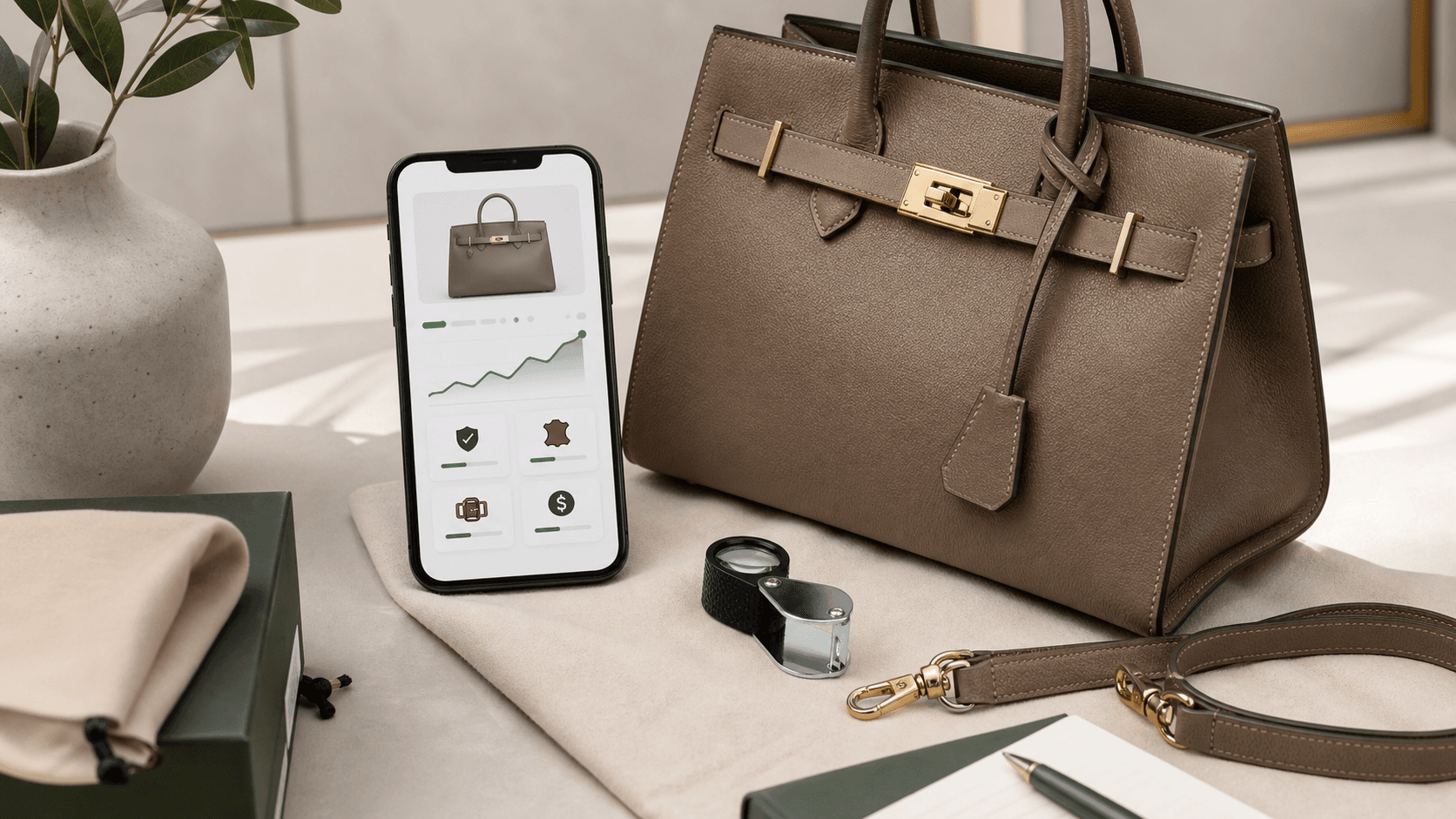
PriceSnap is a mobile app for iOS and Android.
Use the app while reading this guide to scan items, estimate resale value, check marketplace comp signals, and save finds to your collection.
Key takeaways
- Exact model, size, leather, hardware, color, and year are key inputs for handbag value.
- Condition issues such as corner wear, glazing cracks, odor, stains, and hardware scratches materially affect price.
- Dust bags, boxes, receipts, cards, straps, locks, and original accessories can improve buyer confidence.
- PriceSnap can provide a starting resale estimate, but high-value bags should be authenticated before sale.
Try alongside this guide — scan straight from your camera roll.
Identify the Bag Precisely
Start with the brand, model, size, material, hardware colour, colourway, year or season, and any serial or date code and interior label. Designer houses produce the same silhouette across multiple sizes, leathers, and hardware finishes, and those variations do not command the same resale. A small change in leather type, a size step, or a shift from gold to silver hardware can produce a materially different range for what buyers loosely call the same bag. Interior labels and heat stamps usually carry the information you need, and on many brands a date code or serial identifies the production period. If the model name is uncertain, photograph the front, the side, the interior, the hardware, and every label before you start searching, because the model name is what makes the search work and guessing it wastes the research. Note also whether the bag is a current-season style or a discontinued one, since discontinued models behave differently in the secondary market.
- Brand, model name, and size designation as the house names it.
- Material: the specific leather or canvas, not just "leather".
- Hardware colour and finish, and whether it is original or replaced.
- Colourway, using the brand's own colour name where you can find it.
- Interior heat stamp, serial number, or date code and where it sits.
- Whether the style is current-season or discontinued.
Read next:Designer bag value checker
Condition Details That Matter
Luxury bag buyers inspect corners, handles, glazing, stitching, lining, hardware, odour, stains, shape retention, strap wear, and zipper function, and they inspect them in roughly that order because that is the order in which wear usually appears. Corners go first on almost every structured bag; handles darken and soften with hand oils; glazing — the painted edge finish — cracks and lifts before the leather beneath shows any damage. Interior lining stains and pen marks are common and heavily penalised because they are hard to remedy. Odour is worth a specific mention because it cannot be photographed, it cannot be hidden, and it is one of the most frequent causes of returns. Be honest about all of it. A precise condition description builds the trust that carries a high-value sale; concealing damage reliably produces returns, disputes, and a lower net than an honest listing would have achieved in the first place.
| Area | What to look for | Typical impact |
|---|---|---|
| Corners | Scuffing, rubbing through to the layer beneath | High — the first thing buyers check |
| Handles | Darkening, softening, cracking | High on hand-carried styles |
| Glazing | Cracked or lifted painted edges | Moderate to high; visible in photographs |
| Interior lining | Stains, pen marks, residue, odour | High and hard to remedy |
| Hardware | Plating loss, scratches, stiff or failed zips | Moderate; a failed zip is a repair cost |
| Shape | Slouching, creasing, loss of structure | Moderate on structured styles |
Accessories and Proof
Dust bag, box, receipt, authenticity card, lock, key, clochette, strap, care booklet, and original packaging all affect resale confidence, and confidence is a large part of what a buyer pays for at this price level. Missing accessories rarely destroy value on their own, but buyers pay more when a set feels complete and verifiable, and they discount hard when something that should obviously be present is not — a detachable strap, a lock and key, a shoulder strap that came as standard. The original receipt is the strongest single document because it ties the bag to a purchase at an authorised retailer. Authenticity cards are weaker than sellers assume, since cards are counterfeited as readily as bags and a card is not a substitute for authentication. Photograph every accessory you have alongside the bag rather than describing them in text, and be explicit about what is missing.
- Original receipt — the strongest provenance document, when it exists.
- Dust bag and box, ideally with matching model markings.
- Detachable straps, locks, keys, and clochettes for the specific model.
- Care booklets and any repair or spa-service documentation.
- An authenticity card, noting that a card is not itself authentication.
Authentication Is a Separate Question From Valuation
High-value handbags are among the most heavily counterfeited goods in the world, and the best counterfeits now defeat casual photographic inspection routinely. This makes it essential to keep two questions apart. Valuation asks what this bag is worth if it is what it appears to be. Authentication asks whether it is. PriceSnap and any other photo-based tool answers the first; only a specialist answers the second. The practical workflow is to get a value estimate first, because that tells you whether authentication is worth paying for, then to authenticate before any meaningful money changes hands in either direction. Buying without authentication on a four-figure bag is a gamble; selling without it exposes you to a dispute you cannot win after the fact. Reputable third-party authentication services and specialist consignment houses both perform this function, and their fee is small relative to the exposure.
Read next:How to spot fake designer bagsHow to sell a luxury bag
Compare the Right Comps
Compare bags with the same model, size, material, hardware, colour, and condition, and resist the temptation to substitute retail price for any of that work. Retail price is not a resale anchor. Secondary-market prices follow buyer demand, scarcity, condition, and trust signals, and for most models they sit below retail — sometimes far below — while a small number of persistently scarce styles trade above it. Colour is a larger factor than newcomers expect: a neutral colourway in a classic style will usually clear faster and higher than an unusual seasonal colour in the same model. Consider also where the comp came from. A consignment house price includes authentication and a guarantee; a private peer-to-peer sale does not, and the two are not interchangeable comps. Match the selling context as well as the bag.
- Match model, size, material, hardware, colourway, and condition.
- Never use retail price as a resale anchor.
- Compare like selling contexts — consignment prices include authentication.
- Account for colourway; neutrals in classic styles generally clear best.
- Distinguish discontinued scarcity from ordinary seasonal turnover.
Where to Sell Changes the Number
The same bag returns different amounts depending on the channel, and choosing the channel is part of pricing rather than a step after it. Consignment houses and authenticated luxury marketplaces take a substantial commission but bring buyers who are prepared to spend at that level and who trust the platform's authentication. Selling privately on a general marketplace keeps more of the headline price but requires you to establish trust yourself, and high-value bags attract a correspondingly high rate of scam attempts and dispute risk. Local sale eliminates shipping risk entirely but shrinks your buyer pool to whoever is nearby and willing to carry cash. Work out the net for each route rather than the gross: a lower headline price through a channel that actually completes the sale, and protects you if it goes wrong, frequently beats a higher price that never closes.
| Channel | Strength | Cost or risk |
|---|---|---|
| Consignment or authenticated marketplace | Trusted buyers, authentication handled | Substantial commission; slower payout |
| General peer-to-peer marketplace | Keeps more of the headline price | You carry trust-building and dispute risk |
| Local in-person sale | No shipping risk, immediate settlement | Small buyer pool, cash-handling concerns |
Read next:Where to sell thrift finds
How to Scan a Designer Bag
For the best PriceSnap estimate, photograph the full bag from the front, the interior label, the serial or date code if you can reach it, the hardware close up, the bottom corners, the strap, and each flaw individually. Corner and glazing shots matter most because they carry the condition information a buyer will ask about first. Add a note for size, material, and which accessories you hold. PriceSnap will return a directional range that tells you whether this bag justifies authentication, consignment, and a full listing — or whether it is a lower-value piece to move quickly. Use the estimate to decide how much process the bag deserves, then let authentication and condition set the final number.
Read next:How PriceSnap estimates resale value
Related categories
FAQ
Designer Bag Resale Value Guide: How to Price Luxury Handbags — FAQ
Straight answers about accuracy, platforms, and how PriceSnap fits your workflow.
How do I estimate designer bag resale value?
Identify the brand, model, size, material, hardware, color, condition, included accessories, and authenticity signals, then compare recent resale comps.
What condition issues lower handbag value?
Corner wear, cracked glazing, stains, odor, loose stitching, tarnished hardware, broken zippers, missing straps, and interior damage can all reduce value.
Do dust bags and receipts matter?
Yes. Original accessories and proof of purchase can increase buyer confidence and may improve resale value, especially for higher-value bags.
Can PriceSnap authenticate designer bags?
PriceSnap provides value estimates and can flag risk signals, but it is not a replacement for professional authentication on high-value handbags.